
MY MEMOIR AS MAYOR OF HOP BOTTOM BOROUGH
A THANK YOU FROM THE NEW MAYOR JEFF ZICK
Thank you Hop Bottom for allowing me to represent you as Mayor. I am grateful to be in this position and I look forward to representing each and every resident at the table. I am actively soliciting advice, comments and concerns on anything concerning Hop Bottom. So please feel free to reach me at mayorjeffzick@gmail.com with any matter. I will do my best to make sure it gets addressed by myself or Council.
I was sworn into office in January 2026. Beginning in February, Borough Council President requested that a formal Mayor’s report be provided on a regular basis. What follows is a brief reflection on my first part of the year in the office and the work we’ve begun together on behalf of Hop Bottom Borough. The monthly Mayor’s report can be found on the Borough website hopbottompa.gov under Agenda/Mayor’s Report /Minutes.
Over these first few months, much of the focus has been on addressing everyday operational needs while laying the groundwork for long term improvements. This has included winter maintenance such as snow removal, clearing hydrants and crosswalks, and transitioning into spring readiness with drainage cleaning, pothole planning, and park maintenance. We’ve also taken steps to improve organization and transparency, updating the Borough website, mapping infrastructure like hydrants and catch basins, and beginning development of tools such as an equipment inventory and digital communications. At the same time, I’ve worked alongside Council Members, the Hose Company, community organizations, our small businesses, snow contractors and state partners like PennDOT to stay ahead of upcoming projects, including the bridge work and safety considerations tied to it.
Equally important, the Mayor has been listening to residents and responding to community needs. We’ve received and acted on requests ranging from code enforcement concerns to public safety, parking during snow emergencies, and the need for more community programs. There is clear interest in initiatives that strengthen community connection such as a farmers market, community gardens and advocating for support systems for vulnerable residents during emergencies. As we move forward, my goal remains simple: to continue building a more responsive, organized, and forward looking borough government while maintaining the small town character that makes Hop Bottom special.
A MAYOR’S ROLE IN HOP BOTTOM
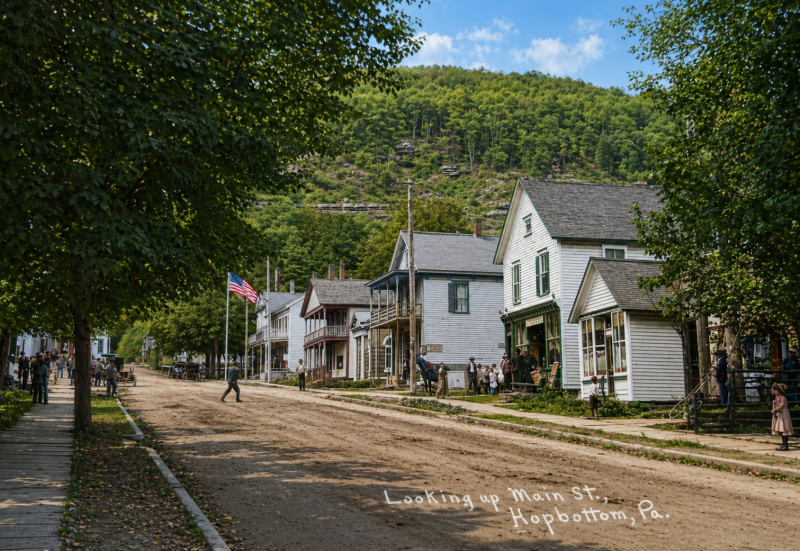
Hop Bottom operates under what is often called a “weak mayor” form of borough government, meaning the Mayor does not run the Borough, control Council, or independently direct spending, staffing, or policy. Those powers belong primarily to Borough Council. Traditionally, the Mayor’s clearest statutory role is tied to public safety, especially oversight of the police department if one exists, along with representing the Borough, preserving order at public meetings when needed, and using the position to bring concerns, ideas, and leadership to the public conversation. The Mayor may also cast tie breaking votes in certain situations when Council is deadlocked, and the Mayor has historically signed Borough ordinances and resolutions along with the Council President and Borough Secretary as part of the formal record of Borough action. The mayor holds veto powers as well.. Below is a color added post card of early 1900’s Hop Bottom.
Hop Bottom, however, does not currently have a functioning Borough police department, even though there does not appear to have been an ordinance formally disbanding the old one. That creates a practical reality, the Mayor’s traditional police related role is limited because there is no local police force to supervise. At the same time, the financial reality of restarting or maintaining a Borough police department would be significant. Between wages, training, insurance, vehicles, equipment, policies, liability, scheduling, training and administrative oversight, local policing would likely place a heavy burden on a small Borough budget. That does not mean public safety should be ignored. It means Hop Bottom needs realistic alternatives, such as stronger ordinance procedures, clearer complaint processes, coordination with Pennsylvania State Police, community safety planning, emergency preparedness, code enforcement where lawful, and practical prevention based ideas that fit the size and resources of the Borough.
In that sense, the Mayor’s role in Hop Bottom should not be dismissed simply because the office has limited formal power. The Mayor can still serve as a voice for public safety, accountability, modernization, and community improvement. Without a local police department, the Mayor’s responsibility becomes less about commanding a force and more about identifying gaps, pushing for lawful and affordable solutions, encouraging better procedures, and helping Council better the Borough. A weak mayor may not have strong unilateral authority, but this office can still provide strong leadership.
GIVING BACK
I’m also proud to share the continued success of a privately funded community bike program, which has provided 13 new bikes to local children in need of a safer or better fitting ride. The goal is simple: to make sure every child in Hop Bottom has access to a safe, reliable bike while encouraging healthy, active lifestyles. As we breeze through bike season, if you know of a child in the Borough without a bike, please reach out so I can help. In addition, our local youth have been actively involved with the Mayor in community service efforts, including leaf removal along Railroad Street and at Mary Karhnak Memorial Park, demonstrating a strong sense of pride and commitment to our community.
As part of ongoing efforts to support Borough operations and address needs not currently covered in the budget, I and my wife Amanda have personally donated without remuneration a variety of items to help avoid additional taxpayer expense while ensuring important resources are available. These donations include a new LED strobe light for UTV safety, dog waste bags for the park, a used HP laptop with accessories (wireless mouse, laptop bag and power cord) for administrative use, an audio/visual plaque, corrugated sign for front vestibule, two 5 gallon gas cans, ice melt, two U.S. flags and 22 flag poles, Christmas light storage reels, nine tennis rackets, two pickleball paddles and six pickleballs for recreation, and eight 50 lb. bags of cold patch for roadway maintenance. These contributions are intended to support day to day operations, enhance community spaces, and provide practical benefits across the Borough.
The Mayor and Council Member Amanda Zick have also worked directly with many of the youth and teens in the Borough to address concerns raised by residents. Rather than simply reacting to problems, we have taken an active role by offering guidance, encouraging better choices, campaigning against bullying, discouraging disrespect toward Hop Bottom residents, and organizing young people to help clean up trash throughout the neighborhood.
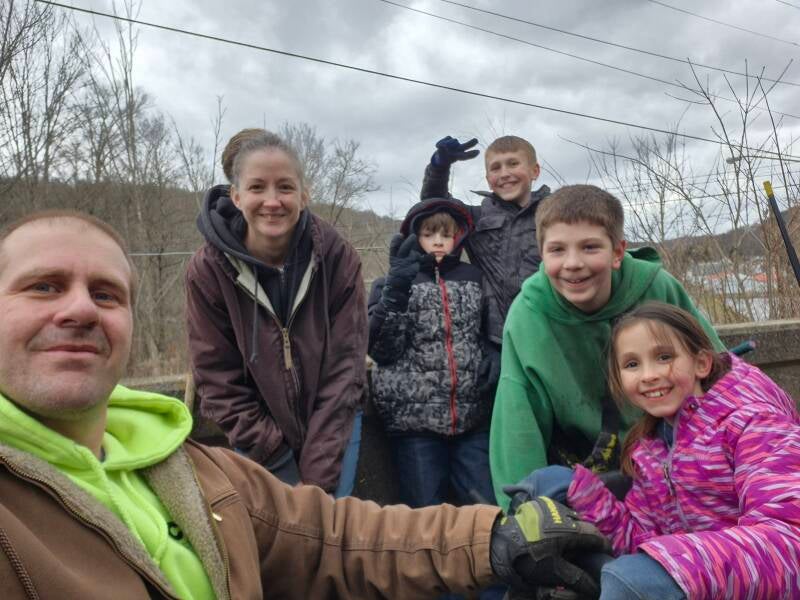
This strategy of involvement has helped create a safer and more connected town. By working with the kids instead of against them, we have built trust, opened communication, and shown young people that they have a role in improving their community. The result has been more accountability, stronger relationships, and a better sense of pride in Hop Bottom. Pictured below is neighborhood kid volunteers helping rake leaves accumulations in drains.
HOP BOTTOM HISTORY AND EVENTS
Creating the Facebook group Hop Bottom History and Events was one of the first steps I took as a citizen before even stepping into a political office. The purpose was simple: to help rekindle the spirit of Hop Bottom by focusing on what I believe are two of the Borough’s greatest assets, its rich history and its people.
I would like to renew and formalize an idea I previously brought forward: creating a dedicated historical display area inside the Hop Bottom Borough Building to collect, preserve, curate, and display items connected to the history of Hop Bottom Borough and the surrounding community.
This idea comes from a very personal place. I spent nearly 20 years working for my late Uncle, Gerald Pennay Sr. on Monday nights at the fire hall. Auctions, where I saw firsthand how much local history passes through people’s hands. I never realized the importance in my youth until I gained a few grey hairs. I then saw time differently, how often that history is hoarded away, sold off, discarded, or lost to other towns and private collections. Too many photographs, documents, signs, tools, records, and family artifacts disappear before anyone has the chance to recognize their importance.
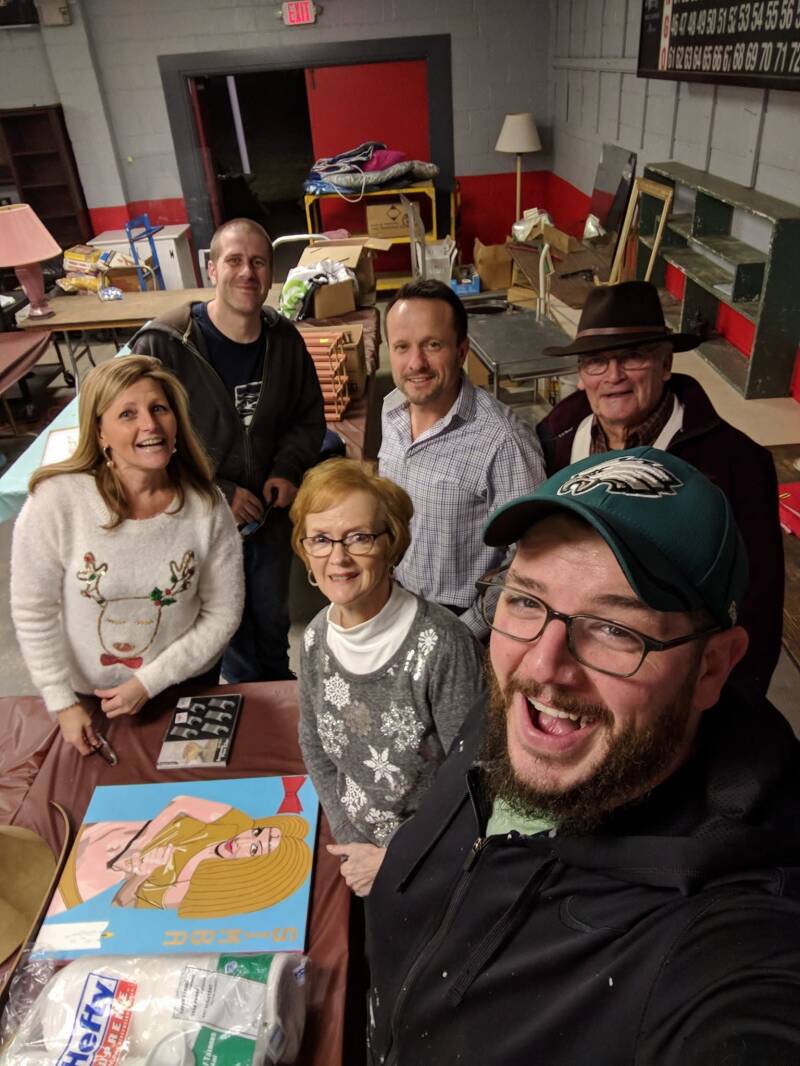
A recent example is a barn find out of Springville from Ebay.com. A 5" apothecary bottle with "M.A. Blair Pharmacist Main Street Hopbottom" that had me bidding until it sold to another collector for $222.50 plus tax and shipping. Hop Bottom is one of the most collectable towns on the internet including the illusive Hop Bottom National Bank 1929 $10 national currency which I too regret not purchasing for $350 when on Ebay. It sold on Heritage Auction for $720 plus buyers commission. Pictured below is Gerald Pennay Auction's staff in Hop Bottom Fire Hall circa 2017.
Hop Bottom has a story worth preserving, even as the town’s character continues to change and adapt to the modern version of itself. Our town played a role in the development of the lives we live today, and our children should have the opportunity to see, possibly touch when applicable, and understand that history. A permanent or rotating display in the Borough Building would give residents, visitors, students, and future generations a place to learn about the people who helped shape this community.
Several community members have already expressed interest in donating historical items, and some have shared a desire for their families or loved ones to be remembered through contributions to a future Hop Bottom display of pride. That willingness should not be overlooked. Once these items are gone, they may never return.
When this idea was first discussed, it appeared to be met with little resistance by Council, but it has not yet materialized. I believe now is the right time to move it forward in a practical and organized way. This does not need to begin as a large or expensive project. It could start with a secure display case, a small committee or volunteer group, basic donation guidelines, and a simple process for documenting contributed items. Over time, it could grow into a meaningful community archive and educational resource.
There may also be grants available for local history, preservation, education, museum style displays, community development, and heritage projects. With Council’s support, we could explore those funding opportunities and avoid placing an unnecessary burden on borough taxpayers.
This proposal is not about nostalgia alone. It is about stewardship. It is about protecting the memory of Hop Bottom before it is scattered or forgotten. It is about giving our young people a reason to take pride in where they come from. It is about honoring the people who built this borough and creating something lasting for those who will come after us.
Hop Bottom has always had a story worth preserving, but history alone is not enough. A community also needs places and opportunities for people to come together, reconnect, volunteer, celebrate, and build trust. The Facebook group was meant to be a starting point for that effort. It created a shared space where residents could remember the past, talk about events, share information, and begin rebuilding a stronger sense of community.
Looking ahead, I believe there is also a real need for a future new community center in Hop Bottom. In time, such a facility could serve multiple important purposes. It could provide space for fire and emergency response, EMT operations, and, if feasible, a future ALS unit or regional emergency medical base. It could also serve as a new Borough garage, an Emergency Operations Center in coordination with Susquehanna County, and a central location for community events, public meetings, training, and emergency preparedness.
A properly planned facility could also help reduce long term risk. Much of the current town, including the existing fire hall and many residences, is located within the floodplain. Relocating critical infrastructure to a safer and more strategic location would strengthen emergency response, improve public safety, and protect important municipal services from future flooding concerns.
At the same time, the current fire hall property could eventually be repurposed as an event ground or community gathering space. That could create new opportunities for local events, fundraisers, amusement proceeds, vendor activity, and downtown foot traffic. If planned correctly, this type of transition could help Main Street thrive again while creating small job opportunities for local teens, retired residents, volunteers, and community members looking to stay involved.
That is the larger reason behind creating a place for Hop Bottom to unite, even if the first step was only on Facebook. It was never just about social media. It was about rebuilding connection, pride, and possibility. I believe that over time, with the right planning and support, the Borough can get behind projects like these and begin moving Hop Bottom toward a stronger future.
PROPOSAL FOR ENHANCING BOROUGH COUNCIL
As Mayor, I respectfully submitted a robust proposal to the Council President, in February, to strengthen the efficiency, transparency, and overall function of Borough Council operations. Although it’s uncommon for a new Mayor to advise on governance, these recommendations were intended to improve meeting structure, ensure compliance with Pennsylvania law, enhance public participation, and modernize Borough Hall to better serve our residents. By establishing clear procedures, improving record keeping, updating our facilities, and continuing the review and codification of ordinances, we can create a more professional, accessible, and accountable local government that works effectively for the people of Hop Bottom now and in the future.
Codification (Ordinances & Resolutions)
- Solicit bids for professional codification services
- Compile all ordinances and resolutions (1946–present)
- Conduct special sessions for council review
- Require Solicitor review for legal compliance
- Publish finalized code on Borough website
- Provide plain-language summaries for public understanding
- Enable enforcement through a code officer or third-party appointee
Meeting Procedures
- Adopt formal council rules and procedures
- Implement Citizens’ Participation Request Sheet (name, address, contact)
- Limit direct presentations to residents and taxpayers
- Route non-resident input through the Secretary
- Establish a 5-minute speaking limit
- Implement standardized complaint forms (paper and online)
Meeting Structure
- Adopt a numbered order of business for all meetings
- Standardize agenda flow for consistency and clarity
Public Access and Room Setup
- Ensure all Council Members face the public
- Provide ADA-compliant seating
- Expand seating capacity as needed
- Improve layout for visibility and engagement
Council Chamber Upgrades
- Acquire updated desks and chairs as needed
- Install nameplates for Council Members
- Relocate Secretary to office workspace
- Install a podium for public speaking
- Require Mayor, Treasurer, and Tax Collector to address council from podium
- Repurpose existing furniture for public seating
Historical Preservation
- Designate space in Borough Hall for historical display
- Utilize existing materials and community donations
- Encourage volunteer participation
- Promote educational value for residents and youth
Security and Recording
- Install camera system covering entry and key areas
- Record meetings for documentation and public record
- Utilize DVR and motion-activated systems for cost efficiency
- Improve overall building security and accountability
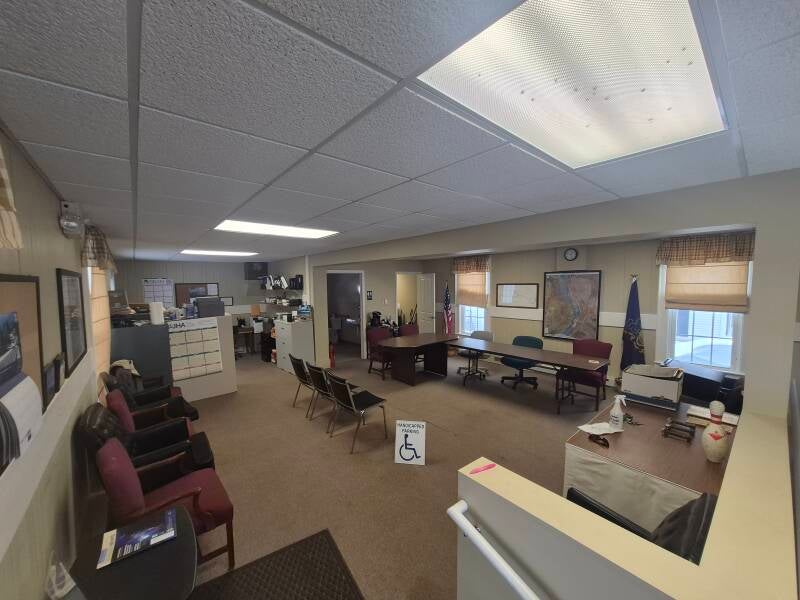
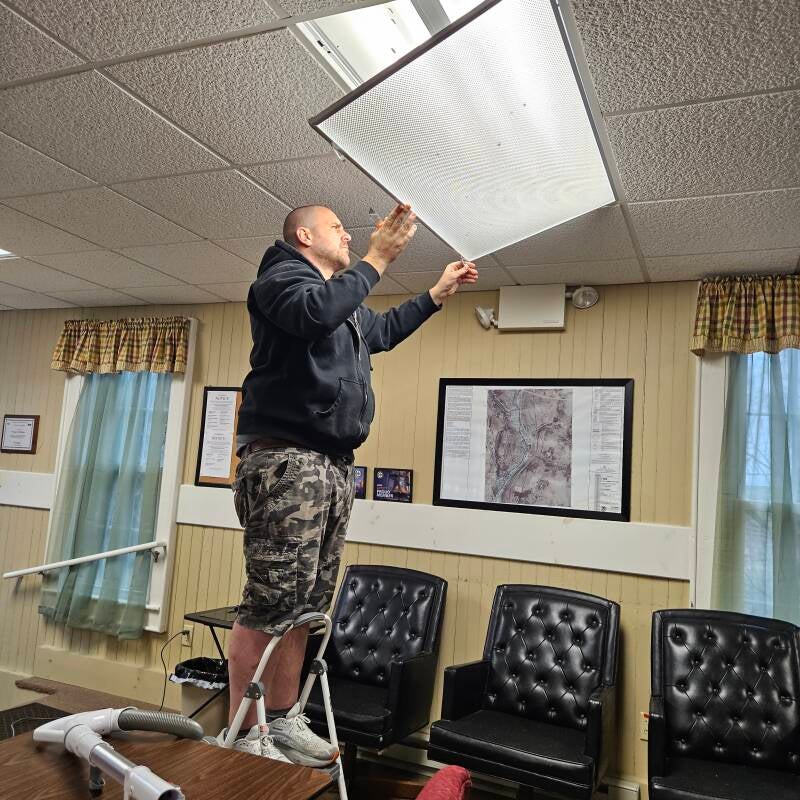
Along with this presentation, Council Member Amanda Zick and I rearranged the room using existing furnishings to improve safety, increase ADA access, use existing items in the room, create a forward facing government setup, and allow for more seating, including ADA compliant arrangements. Our hope was that, with a modest investment, the Borough Building could be used more efficiently while also functioning better as a public government space. Along the half wall recommendations were made for a Borough owned historical display area. Pictured below is a fictitious ADA friendly set up presented to Council President and Mayor cleaning years of dead bugs from lights.
Ultimately, Borough Council did not follow that recommendation as planned with some citing anything from “I will quit” to the old “nobody comes to meetings”. However, agreeing the antique black chairs were destructive, they reached out for some used furniture from the Borough’s bank, which resulted in an impractical package of warehoused tables and chairs. The old mildew covered chairs that rubbed walls of paint were removed, the rough looking pressed board conference table was sawed down multiple times now with shortened but sharpened edges. The group of all arranged in a clump in the center of the room so if many members of the public attended, it quickly becomes inadequate for all. The new setup makes Borough Hall less ADA compliant, more confusing for the public, less safe by putting Borough Officials backs to the door and citizens, also blocking key areas like the bathroom and practically unusable for modular work sessions or meetings. Pictured below is the Council room after the May meeting.
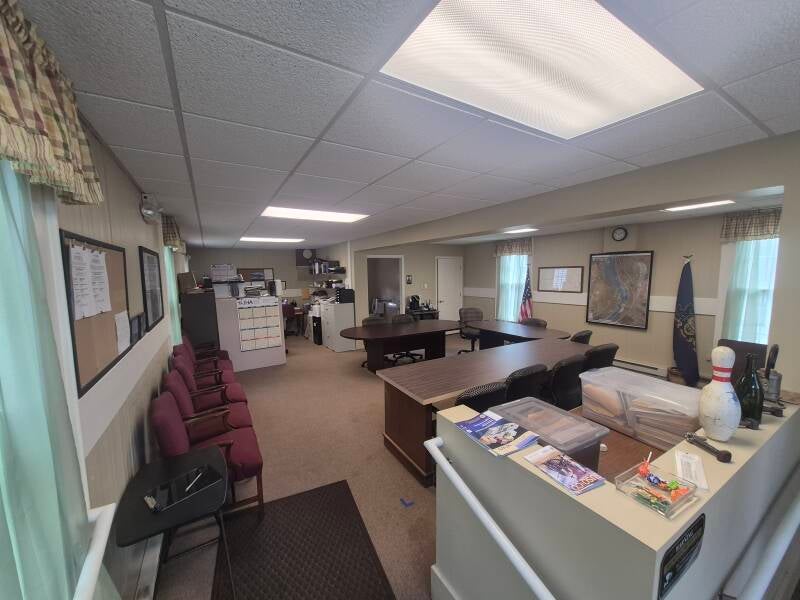
The addition of these large, clunky items also creates another problem: it may now be impossible to hold elections, more than 6-8 visitors, and other events in the space without labor to move the bulky items. However the restroom is now blocked and wheel chairs have no accessibility to the Council room past the top of the rampway. What should have been a simple improvement to safety, ADA access, and public function became another example of the government ignoring practical recommendations and creating multiple new problems in the process.
LACK OF SOLICITOR INPUT
A Borough Solicitor should not be treated as an occasional afterthought. If the Borough is making legal decisions, adopting ordinances, revising procedures, handling enforcement issues, or entering into agreements, then legal guidance should be budgeted for and used in a consistent, transparent way. A solicitor does not need to run the Borough, but Council should have reliable legal support when decisions carry legal consequences, especially when those decisions affect residents, property owners, public funds, enforcement, or the long term operation of the Borough.
Over the past year, I have attended every Borough meeting except one, and I have never personally seen the solicitor attend a public meeting. The only times I recall the Council publicly stating that the solicitor was consulted during that period was regarding the IPMC adoption and natural gas lease review in May. At the same time, Borough records show money spent on recent legal services in 2019, 2020, and 2022 only. That raises a fair question: if legal services have been used before, why are we not budgeting for them and using them more intentionally now, especially when we are dealing with ordinances, code enforcement, property maintenance, grants, procedures, and public decision making?
A solicitor should be involved before ordinances are passed, not after problems are created. They should help ensure that Borough laws are properly written, advertised, adopted, and enforceable. They should also help councils understand what authority it does and does not have, what procedures must be followed, and where a borough may be creating liability for itself. When legal guidance is missing or only mentioned after the fact, it becomes harder for the public to trust that decisions were properly reviewed.
Budgeting for solicitor involvement is not a waste of money. It is protection for the Borough, Council, taxpayers, and residents. Spending a reasonable amount up front on legal review can prevent expensive mistakes later, including unenforceable ordinances, procedural challenges, public confusion, and unnecessary disputes. If Hop Bottom wants to modernize its laws and function as a stronger local government, then the Borough should budget for regular solicitor involvement and consider having the solicitor attend meetings when ordinances, enforcement, contracts, or other legal matters are being discussed.
IMPORTANT PROCEDURAL NOTES
The January 5th Council meeting proceeded appropriately without issue. Hooray!
During the February 3rd Council meeting, Ordinance 2026-04 Separation of Secretary-Treasurer was passed that had not been properly advertised in the newspaper in advance. This ordinance should have established a resolution for separate salaries but did not.
At the March 3rd Council meeting, a scheduled bid awarding was unintentionally omitted from the agenda. Council Member Amanda Zick made this known before the meeting. The same member made a motion at the meeting to table the awarding of the bid which did not receive a second. The agenda was amended at the meeting, possibly violating the Sunshine Act, to allow for the bid awarding to proceed. A move that could be challenged by competing contractors due to public notice requirements.
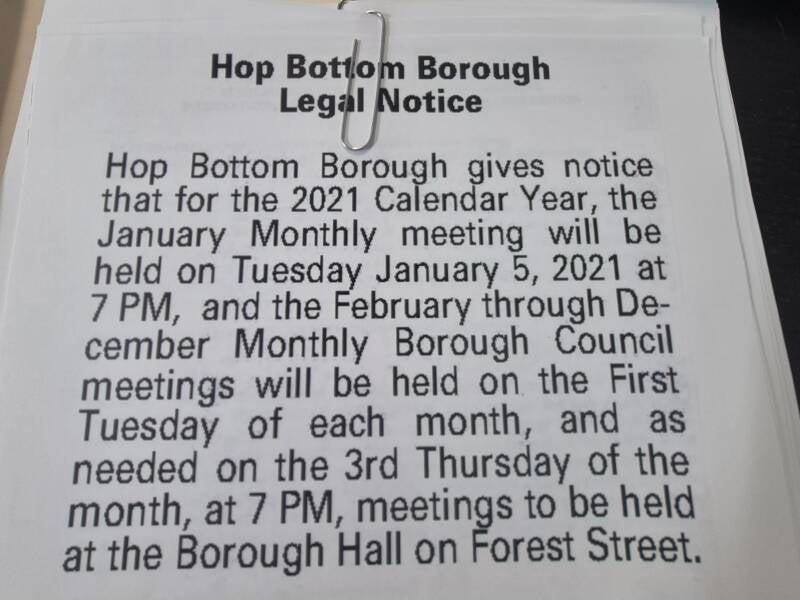
Prior to the next Council meeting in email discussion, Council Member Amanda Zick raised the need to advertise the meeting in the newspaper. This recommendation was not adopted. This Council meeting was held on the third Thursday March 19th, which is generally reserved for regular meetings as stated in the Borough’s yearly public advertisement. However, there was disagreement among Mayor and other Council Members regarding whether that advertisement establishes the third Thursday as a mandatory (“absolute”) regular meeting date. The current advertisement language includes the phrase “as needed,” which created ambiguity. Some members believe that if “as needed” were removed, the third Thursday would clearly be designated as a standing regular meeting date, requiring either a meeting or a formal adjournment. Due to this uncertainty, the meeting was advertised and conducted as a “Special Meeting”, both at Borough Hall and on the Borough website. Photo below of Hop Bottom legal advertisement from 2021.
To provide clearer public notice and ensure continued compliance with the Sunshine Act, the Borough needs to review its meeting schedule advertisement. Options under consideration include advertising both the first Tuesday and third Thursday as regular meeting dates, or continuing with the first Tuesday as the primary meeting and advertising additional meetings individually as needed. The Borough should work with its solicitor to ensure all requirements are met.
Regardless of whether a meeting is classified as regular or special, an agenda should be directed by a president and created by a secretary and posted on the Borough website 24 hours in advance, which this posting is currently the responsibility of the Mayor. A presenting member did provide a mock agenda well in advance of 24 hours, as a guide, for all to review before the meeting. When our Secretary asked about its use as an official agenda by email before the meeting, no response was given, by any member to my knowledge. No formal agenda was posted on the website however after the meeting the mock agenda was added. A total failure in all our making.
Leading up to the April 7 regular Council meeting, Council Member Amanda Zick recommended two key changes to the current IPMC ordinance. One was a clerical correction, and the other was a substantive addition. An actual fee schedule that needed to be formally attached to the ordinance was not only expressed by this member but cited by our third party enforcement as the reason why they cannot enforce it as previously written.
In her review, this member identified several additional issues as well. However, no members of Council responded to her email, and only one of her clerical recommendations was incorporated into the draft. Most notably, the fee schedule was never created, despite being a primary reason for initiating the ordinance review process in the first place, to identify gaps and ensure our ordinances can be properly enforced.
At the April 7 Council meeting, adoption of the IPMC ordinance was ultimately tabled begrudgingly following heated discussion, due to the absence of the required fee schedule, fines section and more clerical errors copied from years past. In an effort to move things forward, Council Member Amanda Zick has since developed a proposed fee structure based on Hop Bottom’s traditional framework, modeled after those used by New Milford and Montrose Borough who use the same solicitor as each other. It is recommended that we run any change in our Borough law by our own Borough Solicitor. Council did finally pass the Secretary and Treasurer Ordinance after timely advertisement and using the proper language to establish a resolution for separate pay.
At the May 5 Council meeting a slightly better IPMC ordinance was brought before council. For months, Amanda tried to drive home the fact that they needed to have the solicitor properly write it, while also explaining how they had failed to understand parts of the law. Amanda has given a huge amount of time to understanding and correcting years of mistakes in Borough law, namely the ordinance adopting the IPMC. After years of no enforcement, undesirable community problems were created because of a lack of Council action. She was correcting their many collective mistakes as the sole new member. Instead, they decided not to respond to her emails, worked without her, attacked her fixes and solutions, all of which were based on Montrose and New Milford examples, then incorrectly called them amendments at a public meeting when in reality they were just required inserts. Finally, taking no suggestions Council passed an IPMC that may be just sufficient enough until legal challenge. If found legally insufficient it would leave the Borough taxpayer responsible for the cost of enforcement and all other fees associated.
And yes, the IPMC does include condemnation like we attempted in 20’-21’, which makes it more imperative to involve our solicitor in the process. The presenting Council Member attested they worked with the third party contractor and our solicitor creating this ordinance however I still have my doubts due to its deficiencies. I almost offered my first veto as Mayor by choosing not to sign this ordinance however I signed it reluctantly knowing that Council may be able to revisit it to correct the mistakes if willing.
Another concern is the potential constitutional and legal exposure created by selective enforcement of Borough ordinances. When a municipality enforces its code against some residents or properties while ignoring similar violations by others, it raises serious questions of fairness, equal treatment, and due process especially when entering a home.
The Borough’s laws should be applied evenly, consistently, and completely. Decisions about whether to enforce an ordinance should not be made through informal conversations during or after public meetings, nor should enforcement be based on personal relationships, complaints from select individuals, political pressure, or preference. If the Borough is going to enforce a code provision, it should do so through a clear, documented, and uniform process.
Selective enforcement can create liability for the Borough and give the appearance that laws are being used as a tool against certain individuals rather than applied equally to everyone. At minimum, Council should adopt a consistent enforcement policy so that all residents are treated fairly and the Borough is protected from unnecessary legal challenges.
ADMINISTRATIVE & LEGAL COMPLIANCE CONCERNS
The Borough is still required under Pennsylvania law, including the Sunshine Act, Borough Code, and Municipal Records Act, to properly prepare, maintain, and preserve official records, including agendas, meeting minutes, and ordinances.
At this time, there are still concerns that these requirements are not being consistently met. Agendas must be publicly posted 24 hours in advance of meetings, minutes must accurately reflect proceedings and official actions, and ordinances must be properly advertised, recorded, and maintained. Additionally, official documents must be created, printed, and some filed thrice in accordance with state record retention requirements.
In addition to these concerns, the Borough is also required to provide updates regarding any changes in law or ordinance to the Susquehanna County Law Library. When I contacted the County Chief Clerk about this matter in May, I was informed that the Borough has not responded to their emails requesting updates in over a year.
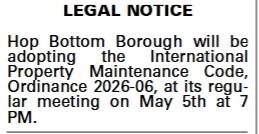
This is concerning because proper communication with the County Law Library helps ensure that local laws, ordinances, and public records remain accurate, accessible, and up to date. If the Borough is not responding to these requests, it may create confusion for residents, officials, attorneys, and anyone relying on accurate municipal records. Image below of an example of a Hop Bottom legally insufficient advertisement from May 2026.
There are significant gaps in record keeping. Some records are covered in mold and mildew due to neglect, inadequate storage and / or general lack of air circulation and conditioning throughout the Borough Building. At some points documents are / were being taken and stored in individuals homes instead of remaining in the Borough building. Some include files containing elected officials' social security numbers and other sensitive personal information. We do not have a formal Borough policy for retention of these records. I would implore future administrations to create such a policy.
Digital recordings have aided our Secretary in the taking of minutes however I have concern that these recordings are official recordings. This may not be a clear Sunshine Act violation by itself, because the Sunshine Act requires written minutes, not audio recordings. But if Hop Bottom Borough is making official meeting recordings and deleting them after transcription, that may violate public record retention expectations and may interfere with the public’s Right to Know access. Council should adopt a clear policy stating how recordings are stored, how long they are retained, and how the public may request them.
Council Members, Secretary and Treasurer have taken significant steps to begin organizing and stabilizing these records. However, due to poor air circulation within the building, the absence of a formal Borough record retention policy, and a lack of consistent security measures for sensitive information, these efforts alone are not enough to resolve the underlying issues. Photo below of Hop Bottom Borough Building in April 2026.
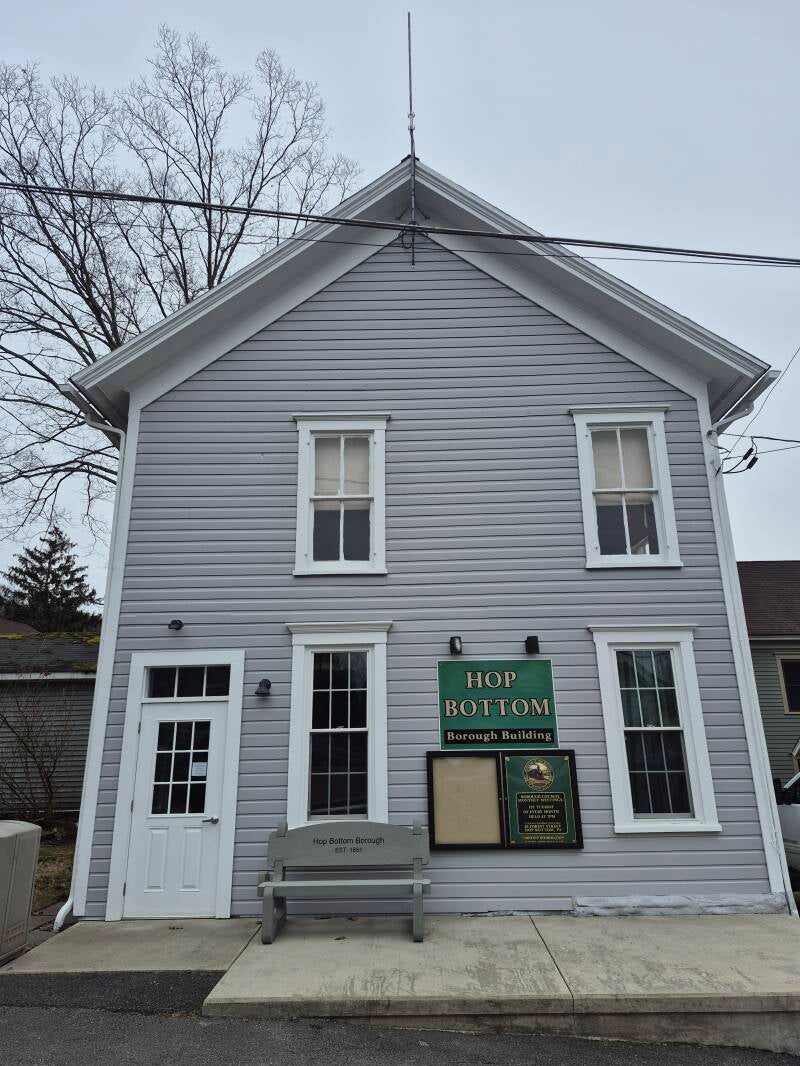
Without meaningful action by Council to address storage conditions, establish clear policies, and implement proper safeguards, these problems will persist. It is important that we take responsibility for correcting these deficiencies now rather than allowing them to continue and become a burden for future generations.
ORDINANCE REVIEW AND MODERNIZATION REPORT SUMMARY
Council Member Amanda Zick as directed by Council President was to perform a complete ordinance review. The purpose of this review was to locate, evaluate the Borough’s existing ordinances for all legal procedures followed and post them on the Borough website. In this process she identified outdated or inconsistent provisions, and prepared updated ordinances that reflect current law, enforcement practices, and community needs. This effort represents a modernization of Borough ordinances, not a formal codification.
The Borough’s ordinances have been adopted over many decades, resulting in multiple ordinances addressing the same subject matter, inconsistent enforcement provisions and penalty structures, outdated language and references, gaps in regulation for modern issues, and a lack of a unified organizational structure. Many ordinances date from the 1940s through the early 2000s and were adopted individually rather than as part of a coordinated code.
Several key issues were identified. Enforcement has been inconsistent, with penalties varying widely across ordinances, procedures not standardized, and limited clarity for code enforcement and magistrates. Many provisions are outdated, including references to obsolete practices and agencies, ordinances not aligned with current state law, and legacy language that is difficult to interpret and apply. Regulations are also overlapping and fragmented, with multiple ordinances governing similar topics, partial repeals and amendments creating confusion, and no central structure for organizing Borough law. In addition, there have been regulatory gaps, including limited or unclear provisions, nuisance and property maintenance enforcement, right-of-way use and infrastructure protection, and vacant or abandoned property controls.
To address these issues, Amanda has prepared and updated ordinances to replace outdated provisions with modern equivalents, consolidate subject areas into single comprehensive ordinances, standardize enforcement provisions and penalties, clarify procedures for notice, enforcement, and appeals, and address previously unregulated or unclear areas. These updates align with current Pennsylvania law, including the Uniform Construction Code (UCC) and International Property Maintenance Code (IPMC). All updated ordinances have been reviewed, prepared for Council input, solicitor review and ultimate adoption. Meanwhile the currently executed ordinances have been made available on the Borough website.
This modernization effort intentionally retains certain ordinances that remain valid and necessary, including floodplain regulations required for FEMA and NFIP compliance, the Zoning Ordinance as updated through targeted amendments, tax ordinances, addressing and administrative ordinances. These remain in effect and are not replaced by this effort.
At present, draft modern ordinances have been prepared, existing ordinances have been reviewed and organized, repealers have been included where appropriate. This places the Borough in a strong position with a modern, enforceable set of ordinances.
If no action is taken and the existing ordinance structure is retained without modernization, enforcement will remain inconsistent, outdated provisions will continue to create confusion, legal risk may increase due to unclear or obsolete language, administrative inefficiencies will persist, and regulatory gaps will remain unaddressed.
While this effort modernizes the Borough’s ordinances, it does not create a formally codified code. It is recommended that the Borough consider formal codification as a next step, which would organize all ordinances into a unified Code of Ordinances, assign consistent chapter and section numbering, eliminate duplication and residual inconsistencies, provide a single user friendly reference for officials and the public, and improve transparency and long term maintainability. The current modernization effort provides a strong foundation for codification. The Mayor has identified a Department of Community Economic Development (DCED) Municipal Assistance Program (MAP) grant for this effort; however, after gaining no support from Council, the 2026 grant window has closed.
This ordinance modernization effort updates and clarifies Borough regulations, improves consistency and enforceability, aligns local law with current standards, and prepares the Borough for future codification. The Borough has completed a comprehensive review and modernization of its ordinances, and adoption of these updates will result in a clearer, more consistent, and enforceable regulatory framework while positioning the Borough for future formal codification.
Beyond a codification presentation, 30 separate points were presented to the Council by Amanda. Simply too many to list here. However during her presentation, Amanda brought forward an important issue regarding the Borough’s cable franchise fee. She explained that many municipalities collect the federally and state allowed maximum franchise fee of 5 percent, while Hop Bottom’s outdated ordinance appears to remain at 3 percent. The ordinance located on hopbottompa.gov is also outdated by name, as it references Adams TV, even though there is another provider like NEP. More importantly, the ordinance may be outdated from a fiscal responsibility standpoint because the Borough may be leaving lawful revenue uncollected. When a 2 percent increase was discussed to bring the fee from 3 percent to 5 percent, the idea met immediate pushback based on concern that the cable company would raise Borough residents’ bills. However, one Council member spoke in support of reviewing the increase, noting that cable bills are often bundled or packaged and that the actual impact may not be as direct as suggested. No action was taken, and as a result, potential municipal revenue remains unrealized.
The Borough’s current code enforcement framework has significant gaps that have limited enforcement in recent years. Based on review, enforcement activity has been non existent since approximately 2021, and the Borough does not currently maintain a comprehensive fee structure to support IPMC’s consistent enforcement and cost recovery. In addition, the Borough has not adopted modern building or subdivision regulations, and continues to rely on outdated code. While the Property Maintenance Code (2018) provides a foundation, it has not been fully utilized. As a result, undesirable conditions have developed across the Borough that require a consistent and enforceable approach moving forward.
ZONING HEARING BOARD - VOLUNTEERS NEEDED
If Hop Bottom has zoning, then it also needs a clear zoning board process so residents and property owners have somewhere to go when a zoning issue is not simple or when strict application of the ordinance creates a hardship. Zoning rules are not just words on paper. They affect how people can use their land, improve their homes, open businesses, build additions, place signs, or deal with unique property conditions. Without a functioning zoning board, decisions can become political, inconsistent, or left entirely to Council, which is not how zoning should be handled. Photo below of Hop Bottom Borough Zoning Map 1980.
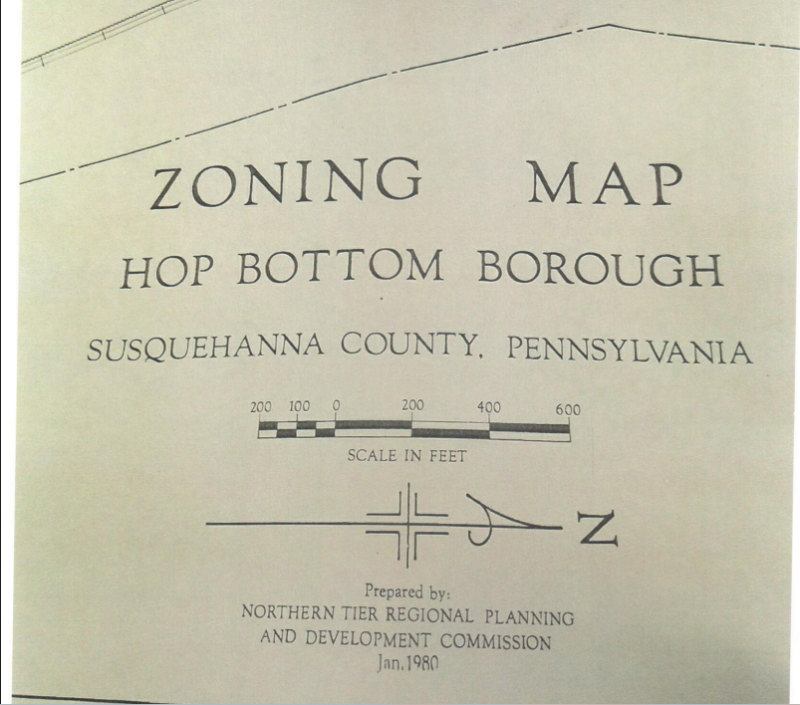
A zoning hearing board gives the Borough a fair and organized way to handle appeals, variances, special exceptions, and disputes over zoning decisions. For example, if a property owner believes the zoning officer made the wrong call, or if a lot is shaped in a way that makes full compliance impossible, there needs to be a neutral board that can hear testimony, review the ordinance, and make a decision based on the law. That protects residents, but it also protects the Borough from accusations of favoritism or selective enforcement. Seeing the issue and trying to resolve it, I have created such a form for zoning issues now available on the Borough website and we have pushed to publicly seek volunteers to join.
The point is not to create more government. The point is to make zoning enforceable, fair, and legally defensible. If Hop Bottom is going to have zoning, then it should also have the proper structure to administer it. Otherwise, the Borough has rules without a reliable process, and that creates confusion for residents, property owners, businesses, council, and anyone trying to invest in the community.
PLANNING THE FUTURE OF HOP BOTTOM
Hop Bottom Borough does not currently have an active planning commission. At one time, the Borough did have one, but it was later abolished by resolution, likely because of a lack of public interest or participation in serving on the board. While a planning commission can be a valuable tool for a municipality, its absence does not mean that planning has to stop. In a small borough, Council can still take a thoughtful and deliberate role in reviewing issues, considering future needs, and making decisions that guide the direction of the town.
At present, Hop Bottom does not have a standing planning committee or active planning body. Instead, most issues are handled individually as they come before Council. This approach can work for immediate concerns, but it also makes it harder to build long term momentum unless Council is intentional about connecting today’s decisions to tomorrow’s goals.
I have reviewed some of the Borough’s older planning records, and there were several excellent recommendations made for the town. Those records show that people cared about Hop Bottom’s future growth and took time to think seriously about improvement, growth, safety, appearance, community development, and long term planning. However, as time passed, many of those ideas proved difficult to implement. Some may have been too expensive, too broad, too dependent on outside funding, or simply not practical for the Borough at the time. As a result, many good ideas remained at a standstill.
That does not mean those ideas were wrong. It may simply mean they need to be revisited, refined, scaled down, or approached differently. A good plan does not always have to be large or complicated. Sometimes the best planning for a small town comes from realistic steps, steady follow through, and a willingness to adapt old ideas to current conditions. Hop Bottom deserves that kind of planning. The Borough does not need to pretend it is something it is not, but it also should not assume that its best days are behind it. I am a dreamer, and I still believe Hop Bottom has not seen its last busy day.
Passenger service shaped this corridor for generations, with the Scranton to Great Bend section opening in 1851, and the broader passenger era effectively ending when the Erie Lackawanna’s last daily passenger train left Binghamton on January 5, 1970. Today, that same corridor is still alive through Norfolk Southern freight service, keeping rail present in Hop Bottom even without passenger stops.
Planning for the future of Hop Bottom means thinking bigger than one town acting alone, while also making sure Hop Bottom is not forgotten. A coalition of Northeast mayors, from Scranton to Binghamton, could advocate, plan, and eventually help make passenger rail stops in communities like Hop Bottom a reality again. A future NYC to Scranton to Binghamton passenger connection would not happen overnight, and it would require serious work involving infrastructure, public safety, mobility, walkability, parking, emergency access, feasibility, and coordination with railroad and state partners. But if rural communities are never included in the conversation early, they are usually left out when the future is built. Image below is a fictitious rendering of a Hop Bottom passenger rail station.
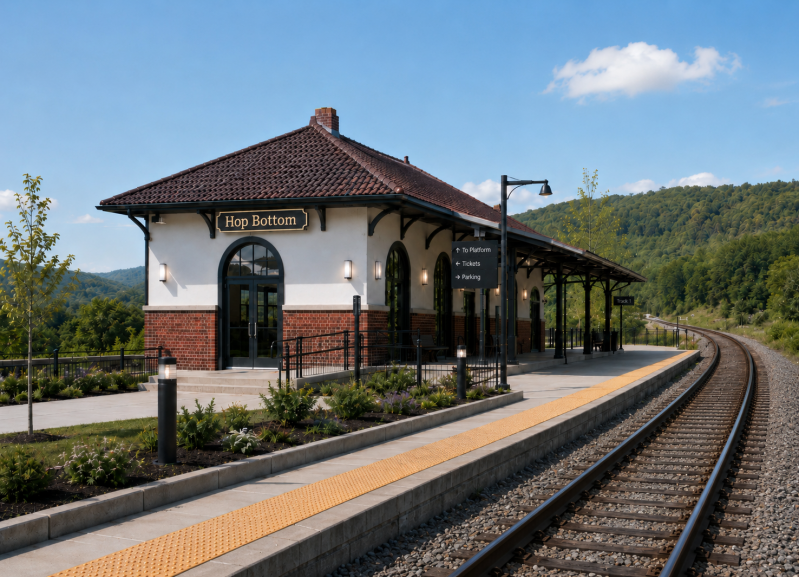
For Hop Bottom, this is not just about trains. It is about opportunity, identity, and long term planning. Imagine a state of the art passenger station right here in Hop Bottom could become more than a stop on a line; it could become a gateway to the Borough and the Endless Mountains. A modern station could be designed with accessibility, safe passenger loading, proper lighting, parking, sidewalks, emergency access, public restrooms, technology, and small-business opportunity in mind. Done correctly, it could honor Hop Bottom’s railroad history while giving the Borough a practical role in the future of regional transportation.
GRANTS IDENTIFIED BY MAYOR AS GRANT COMMITTEE CHAIR
Hop Bottom Borough is fortunate to have Act 13 funding opportunities available because these funds were created to help communities impacted by natural gas development reinvest in public improvements, infrastructure, recreation, environmental protection, flood mitigation, parks, trails, beautification, and other eligible municipal projects. These programs exist so that communities like ours can turn regional resource activity into long term public benefit.
Many Act 13 related grant opportunities generally require a local match, often around 15 percent, which makes them far more attainable than projects funded entirely by local tax dollars. That means a relatively small Borough contribution can potentially unlock a much larger project. However, these opportunities should not be taken for granted. Funding availability can change, grant cycles can close, priorities can shift, and money that is not applied for may not be there forever. Every year the Borough does not apply for eligible projects is a year of potential progress left on the table.
There is not just one narrow pool of grant funding. Many projects can be tied together through planning and community development goals. A single improvement may fit more than one program if it is framed properly. There is also help available to do this correctly, whether through professional grant writers, regional partners, local representatives, or organizations such as the Endless Mountains Heritage Region. At a minimum, however, moving these opportunities forward requires Council action. Grants cannot apply for themselves. Council must be willing to authorize applications, support project planning, and take advantage of funding opportunities when they are available.
Municipal Ordinance Codification Project; DCED (MAP). The funding cycle has closed for this project that proposes to undertake a comprehensive codification project to organize, review, and publish a unified Borough Code. This effort will modernize ordinance structure, eliminate redundancies, identify outdated provisions, and improve public access to local law. This project was not adopted by Council.
Federal Flood Conveyance System Protection Project; Act 13 (FMP) + other sources. The funding cycle for this project closes May 31, 2026 related to the Tanner Dam in Lenox Township and protecting the federally constructed flood conveyance system maintained by Hop Bottom Borough, to prevent intake blockage, protect state roadway infrastructure, and reduce downstream flood risk to FEMA mapped areas including residential properties and the Borough Emergency Operations Center. This project was not adopted by Council.
Main Street Stormwater Interception Improvement Project; Act 13 (FMP). The funding cycle for this project closes May 31, 2026 which proposes installation of an additional upstream catch basins on Main Street and related conveyance improvements to intercept stormwater before it bypasses the existing system. This project was not adopted by Council.
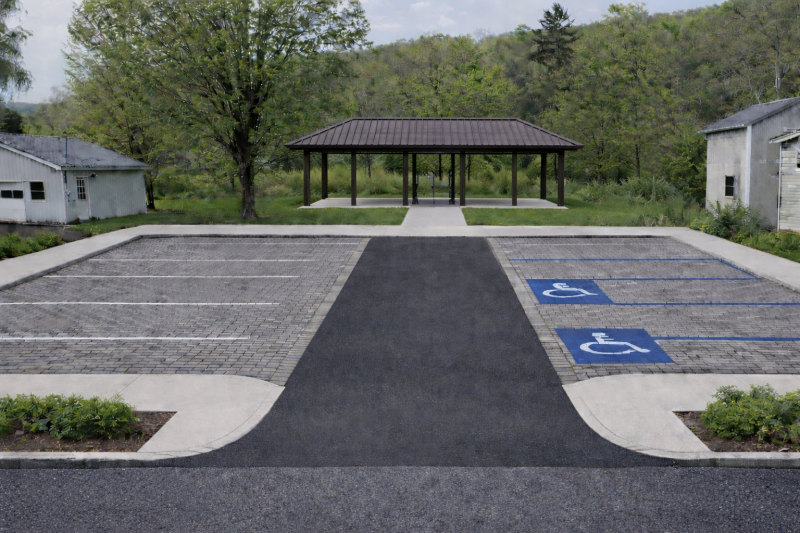
Municipal Access, Parking & Community Pavilion Development Project; DCNR (C2P2) + Act 13 (GTRP) + DCED (MTF). The funding cycle for this project closes May 31, 2026 which proposed a phased infrastructure and community enhancement project at 175 South Center Street, a municipally owned property currently serving as a borough maintenance garage site and overflow parking area for the Borough, Fire Hall, and adjacent church.
With new sidewalks scheduled for installation through separate grant funding, this proposal seeks to proactively develop coordinated site improvements that preserve access, ensure ADA compliance, improve stormwater management, and establish long term public functionality and avoid future curb reconstruction and sidewalk rework. The project was proposed to be completed in two phases which included a new public space. This project was rejected by Council. Image below is a rendering of 175 South Center Street property from this presentation.
Safety Rehabilitation & Playground Surface Replacement Project; Act 13 (GTRP) + DCED (C2P2). The GTRP funding cycle for this project closes May 31, 2026. Rehabilitation of Mary Karhnak Memorial Park is a necessary safety investment that preserves public recreation access in Hop Bottom Borough. By addressing deteriorated surfacing and failing structural borders, this project restores safe play conditions while ensuring long term sustainability of a key community asset. This specific project was not adopted by Council.
CHANGING BOROUGH PRACTICE WITHOUT EXPLANATION
Council agenda items should not be used for private disputes. The proper Borough issue to solve is whether our ordinances are enforceable and whether residents have a clear complaint enforcement process. At minimum, Borough Council should develop a consistent procedure for what residents should do when something creates a public safety concern when the existing ordinance governing is unenforceable.
Most every Hop Bottom Borough property is now in the process of receiving natural gas leases after more than a decade and a half of being surrounded by producing leases and being left out. It has always bothered me how our government never openly questioned this issue, at least to my knowledge. I called it the "Hop Bottom Squeeze" well before being elected. People just believed a story about a magic “cut off” line. In February, I reached out to DEP and Devon Energy regarding this matter to request publicly available information, including plat information for laterals within the Borough that was not available on the DEP website and does not appear to be kept in the Borough’s own files. Both DEP and Devon Energy were responsive, and I also reached out to Coterra, who did not respond at all. The Borough three properties and the rest of the “squeeze” properties have now received new leases as well for property never contracted previously. Council President said this is all because of a new lateral line from the Austin Pad; however, when asked for proof, none was provided. Whether it's coincidence or natural course, I am considering it a victory for the Borough.
In February, I, as Mayor, was appointed head of the Grants Committee, and Amanda was appointed head of Parks and Recreation. I presented, along with many other great ideas, a well prepared grant pitch to replace the over-rotted mulch at the park using Act 13 funds with an estimate of $75,000 - $100,000. It has been decades since it has been done correctly and this plan would have replaced the mulch correctly including drainage and new curbs. The same politicians sitting in the room had not applied for those same funds, despite having years to do so so I went with what’s immediately necessary. At a public meeting I was told that this is not free money by the President, as if I had no knowledge of a 15% match, when the ideas were presented again. Amanda and I brought up dead trees and immediate fence repair concerns at multiple meetings for nearly a year, but no meaningful action was taken on any of it.
A citizen and Hop Bottom Hose Company volunteer reached out to the Mayor personally about an idea to raise funds for the park through tee shirt sales not as a collaboration, but privately noticing and wanting to help out. I told this business I think it’s a fantastic idea. Photo below of Hop Bottom pride tee shirt created by a Borough resident’s small business.
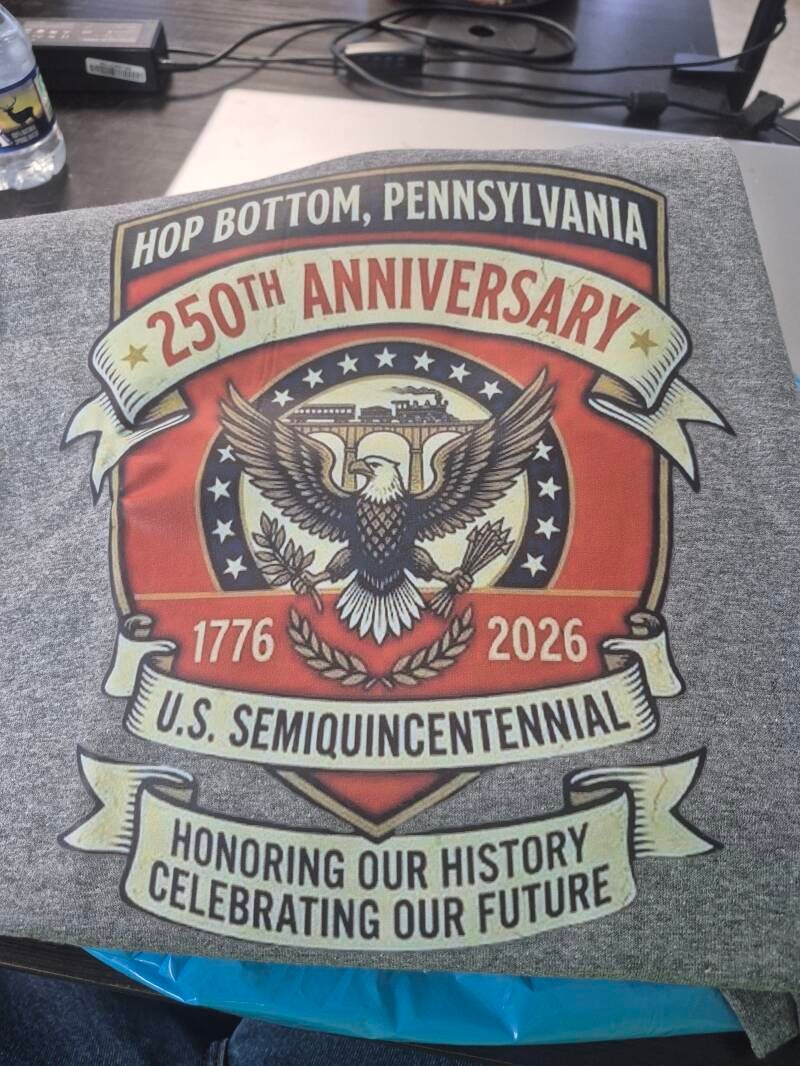
I did not “green light” the tee idea as suggested by the Council President in an email that scolds me for supporting the idea and not following the role of a Mayor in general stating, “Being the mayor does not mean you are running the town and can make decisions without consulting the group - especially without knowing or being aware of all the implications or pitfalls of such a decision. If you have questions, please ask. If you do not wish to reach out to me, ask Deb as she is very knowledgeable on how things work and can answer auditing/funding questions like this with much more of a hands-on background than I can.”
He continued in response to my patriotic tee shirt support, “More broadly you should always think of any possible repercussions of your actions as mayor. The Borough of Hop Bottom did not become ‘Zickville’ last fall when 24.5% of the registered voters in the Borough cast a vote for you as mayor. Being the mayor is not the same as running your own business where you can make decisions on your own.”
He continues, “You are a tiny cog that needs to work with the other tiny cogs to ensure that things are running smoothly and functioning together for the protection and betterment of all those who live here. The ego needs to go, as does the grandstanding. We don’t need to be friends, and we don’t even need to like each other. However, we do need to work together as elected officials in the Borough.“ I replied with the same sentiment back about friendship and leadership in governance.
Then in response to my support of the idea, the two members reached out to that same small business to ask their intention which was to donate back to the community park. In response to the shirt controversy, one member who is not on the grants committee, but is second chair of parks and recreation, decided to skip consulting with Amanda who is chair on the park or Mayor who is chair on grants committee and brought up the need for a park grant, took the Mayor's park grant idea, bulked it up, presented them on their own with assistance from the third party doing current work for the Borough, somehow got a resolution added to the agenda without discussion, and ultimately got it passed with little debate on the $487,000 itemized quote presented. My best guess is that committees and procedures do not matter. Like historically, the Mayor’s signature has been included on most, if not all, Borough resolutions. However, the recent park grant resolution did not include the Mayor’s signature making this resolution unique.
Additionally, the new ordinance adopting the IPMC now uses the wording “Borough President and Borough Council,” as if there is a need to create a hierarchy within the passing language. To my knowledge, this is the first ordinance in Hop Bottom history to distinguish the “President” from Borough Council in the passing language.
These changes may seem small, but they matter. Borough documents should follow consistent practice and should not be written in a way that suggests one council member holds authority above the rest of Council or outside the structure provided by Borough law.
THE FLAG FIGHT BEFORE AMERICA250
During the June 3 Council meeting I was embarrassed by the pushback over something as simple as purchasing new flags for America250 during the night’s Hop Bottom Council meeting. During my monthly Mayor’s report, I brought up replacing the worn and faded flags throughout the borough and displaying them before Memorial Day. For lack of better words, it turned into a mess. I was criticized for even bringing it up and told it was the Mayor’s job to handle.
The issue is, the Mayor cannot simply spend borough money without Council approval. That is exactly why it was brought before the body not once, but twice with no motions. Instead of making a motion to move forward on purchase approval, I was berated. I was told to discontinue my Mayor's report so now I make everything public.
The next day, our borough employee, Council Member Amanda and I counted approximately 50 possible locations under street lights where new brackets, poles, and flags could be installed, and all street lights function correctly. However the next meeting would be after July 4th so this is an issue you think would be of high importance.
Right now, we may have only nine usable brackets in the entire Borough, along with about nine torn and faded flags. Another concern is safety. Installing these properly will require a lift so the work can be done quickly and safely. This should not be expected to be done by ladder only or by magic carpet. Between seasonal displays and flags, we have a need for such equipment. Photo below of flags at the Borough garage June 2026.
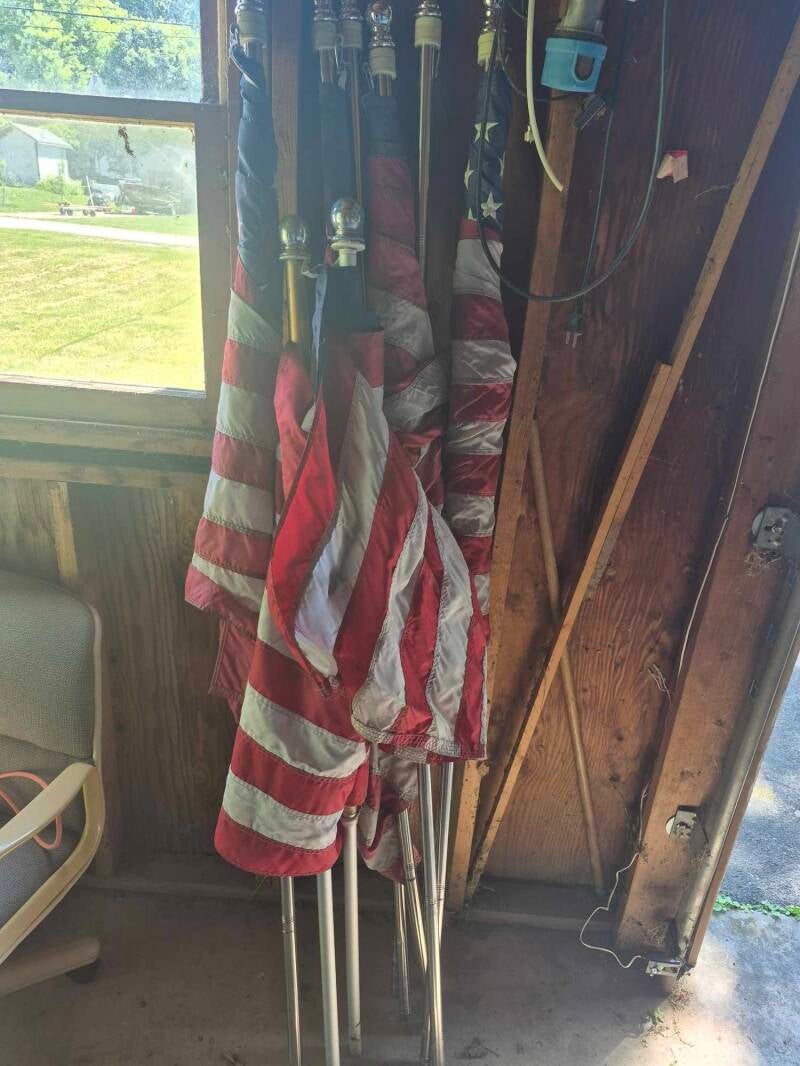
The traffic cones, traffic signage, ladders, drill, man lift, and any other other components needed for this full patriotic installation are going to be borrowed, rented, or donated by members of the community. Just as importantly, the community came out in a major show of support by purchasing flags trying to help make this effort possible by Flag Day and the 4th of July America250 celebrations.
This project is about more than decorations. It is about pride, patriotism, and bringing people together for the betterment of our country in its 250th year but most importantly the betterment of Hop Bottom. The support shown throughout this effort proves that people still care deeply about honoring America, supporting their town, and recognizing those who served. In a perfect world, the lessons learned from this project would help lead to a strong Hometown Heroes campaign for Hop Bottom.
Many years ago, Hop Bottom lost its veterans memorial. A properly organized Hometown Heroes banner program would be a meaningful way to honor the men and women from our community who served our country. It would also give families, residents, and visitors a visible reminder of the sacrifice and service connected to this town.
If the hardware is installed correctly and the program is planned with the future in mind, this effort could become the foundation for additional patriotic displays, seasonal installations, and future community projects. Done the right way, this can be more than a one time installation. It can become a lasting tradition for Hop Bottom honoring America, lifting up Hop Bottom, and creating something the community can be proud of.
HOP BOTTOM WILL HAVE FLAGS?
The Borough maintenance employee has been attempting for most of the week to get clear information about the flags that the Council President stated the Borough began receiving last weekend on the Borough's official social media. As of midweek, there were no new flags located in any Borough building or garage. At this time, it remains unclear how many flags were purchased, who purchased them, where they were purchased, what funds were used, whether receipts have been submitted, or even where the flags are.
I have now been told that no Borough employee is needed to put up the flags and that the Council President has arranged for them to be installed with someone else between tomorrow through Sunday. This is confusing because the responsibility had previously been described as falling to the Mayor last meeting. The Mayor who requested the purchase and brought the issue to Council’s attention for purchase creating the major meltdown issue. In response to that understanding, Council Member Amanda Zick and I worked with our new maintenance employee to map the town, identify locations for proper coverage, assess the condition of the flag holders, and prepare to install the flags properly and safely.
I also rented a lift at my own expense so the Borough employee could complete this work safely and correctly after Council’s lack of support. Due to this last minute change, that lift will apparently no longer be used for its intended purpose. This is frustrating not only because of the personal expense, but because the Borough still does not appear to support buying its own basic tools or equipment, such as a ladder or other routine items needed by employees to perform seasonal maintenance occurring multiple times each year.
Our maintenance employee, a veteran, also took the time to prepare the old worn flags for proper retirement. That effort should be respected. The public has offered donations and support, yet people were told not to donate. I am still without a clear public explanation. Is the President now in charge of this maintenance routine?
If the flags were purchased with Borough funds, then they are Borough property. Borough property should be stored on Borough property, documented, and available for Borough use. It should not be held or controlled privately by one member without clear public documentation which did not happen. Not displaying them while you have people ready to put them up all week makes no sense to me and Council Member Amanda Zick as leaders if you had them last weekend like the post says.
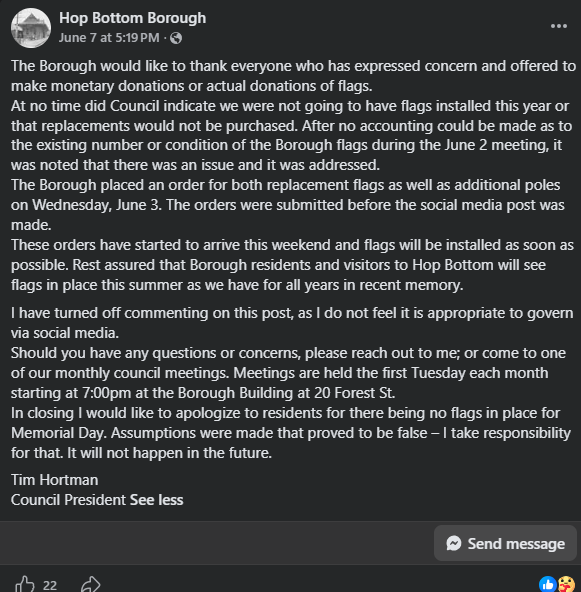
The core issue remains the same. Council should have ensured the Borough had the flags, tools and support necessary to complete the work safely. The Mayor and the maintenance employee were actively working toward solving this issue. The maintenance employee was preparing to do the work properly. The town was being mapped for coverage. The old flags were being handled respectfully.
Regardless as we approach #America 250, there finally will be flags in Hop Bottom and they will be treated with respect from there on out at least while I'm in office. Whether it creates a flag fight or not.
ACCESSIBLE MEETINGS MEAN ACCESSIBLE
My good friend and fellow Mayor, Lou Jasikoff, has worked hard to bring attention to the need for courtroom transparency in Pennsylvania through House Bill 1397. This legislation would allow cameras and media devices in courtrooms, with exceptions for sensitive cases involving issues such as abuse, domestic violence, child witnesses, and confidential informants.
This matters because transparency builds trust. Courtrooms hold enormous power over people’s lives, and the public should have a better ability to see that justice is being handled fairly and professionally. Lou’s work on this issue is not about attacking the courts; it is about accountability, public confidence, and making government more open to the people it serves.
In the spirit of fellow Mayor Lou and in the interest of public accessibility and accountability, it's time to take a new approach to public meetings. While meetings are legally open to the public under the Pennsylvania Sunshine Act, access still depends on physical attendance, which excludes many residents due to a wide range of barriers. The goal is to improve transparency, accountability, and public access without creating a significant burden on local governments. Access would also provide a consistent standard of access across the Commonwealth and allow residents to stay informed on their own time.
The Accessible Meetings Initiative (TAMI) -A campaign to record every council and other public meetings and post the recordings publicly, so all residents, people with disabilities, caregivers, business owners, workers, and taxpayers who cannot attend in person can still see and hear their local government at work. Public meetings should be public for everyone.
This initiative proposes a simple, low cost solution. All public meetings would be recorded and made publicly available online within a reasonable timeframe. This would not replace official minutes and would not require expensive equipment or livestreaming. Most municipalities could comply using basic recording tools. Pennsylvania is also moving forward with major high speed internet expansion, with more than $711 million approved to improve broadband access across the Commonwealth, especially in rural communities where service is still limited or unavailable. While some communities already have internet access, this is an important step toward making sure all municipalities have reliable high speed service as infrastructure continues to expand.
Pennsylvania’s major high speed internet expansion also strengthens the future reality of The Accessible Meetings Initiative (TAMI). As broadband access continues to improve across rural communities, municipalities will have fewer excuses for keeping public meetings inaccessible. Reliable internet makes it more realistic for every borough, township, and local government to record meetings, post them publicly, and allow residents to stay informed even when they cannot physically attend.
IN CONCLUSION
I have dealt with many municipalities and state government officials as both an individual and a business owner. In my profession, I have worked directly with a variety of governments while hosting mass events. I am accountable for every single action, including fire, police, sanitation, refuse, traffic control, road conditions, and an environment where every detail has to be planned, coordinated and implemented correctly, including Emergency Action Plans as guided by PEMA for unforeseen disasters during mass gatherings. Our company essentially operates a city of 10,000 people a few weekends a year, with local permits granted and our professional record is impeccable. I continue to work directly with multiple levels of government and receive strong support from community officials. Photo of a Zick Productions festival crowd in Kutztown, PA.
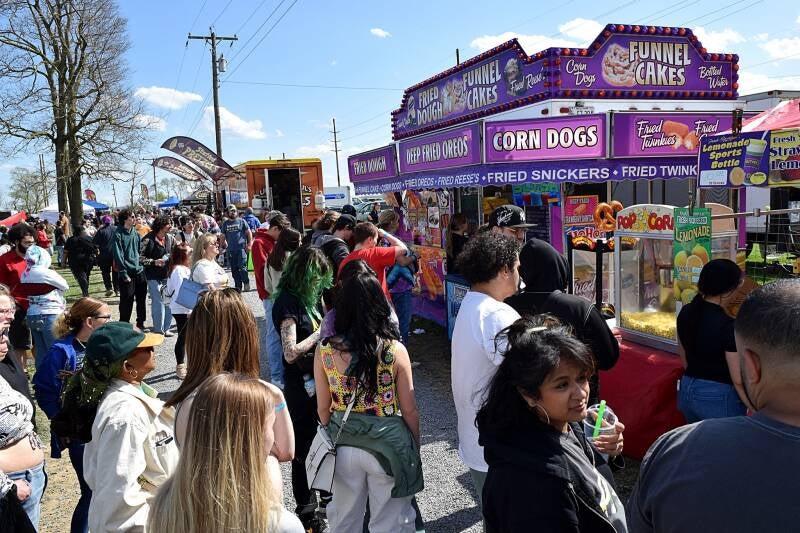
I am not going to be Mayor forever. To be honest, the last Mayor was young and liked by all when he left the seat too. Nobody stepped up to run for the vacant Council seat or the Mayor’s seat. Amanda and I filled those seats out of love for this Borough and a sense of patriotic duty. We have both watched publicly available council meetings, like Scranton’s, every week since we first fell in love with each other in 2013. We have never missed one because of public access, which is something we hope all municipalities consider in the future for residents who cannot attend important public meetings. The unintended consequence of that public access is that we developed a strong sense of pride in our community while learning law, procedure, and the proper function of government. We know when cameras are in public meetings lends itself to safety and accountability. My idea for recording equipment was at first rejected, however I believe that is how we cultivate better government for the people.
I am strong enough to bear the weight of dismissiveness and resistance because we must function as a better government. In full transparency, I hope someone with better ideas than me comes along and fills this seat next. Until then, whether it is modernizing our laws, fixing blight, or correcting our procedures, I will continue to push for what is right. No personal agendas. Whatever it takes to make Hop Bottom better for future generations.
Jeff Zick, Mayor, Hop Bottom Borough